Dick Shearer and his Stan Kenton Spirits
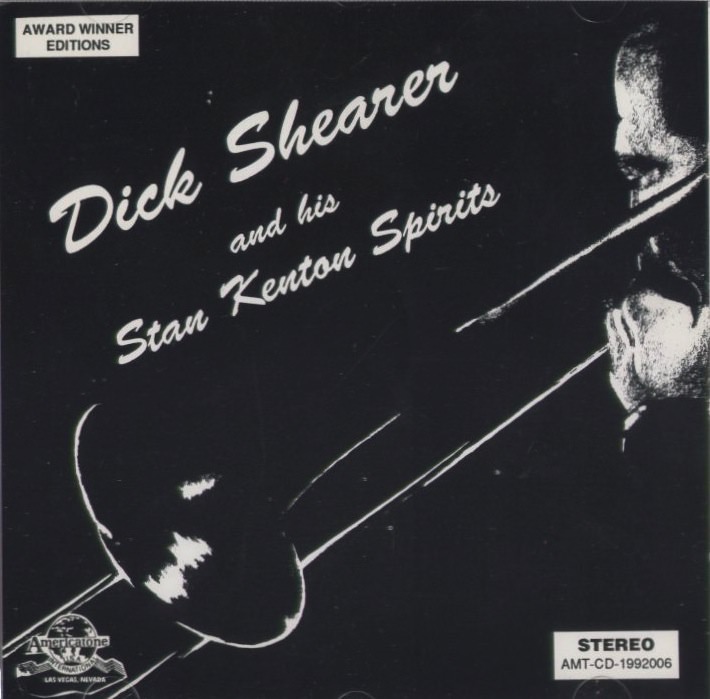
Dick Shearer
Dale Devoe
Scott Helberg
Robbie Hioki
Bob Kammermann
Piano
Cecilia Coleman
Bass
Perola Glad
Drums
Dave Marks
Percussion
Cheri Shearer
Engineer Tom Manasian
Photography Phillip A. Jordan
Liner Notes Marvin Beisel
Americatone
AMT-CD-1992006
Tracks
1. Mix & Match (Bob Curnow) (3:49)
Solos by Dale Devoe and Cecilia Coleman
It‘s a happy chart by Bob Curnow that gets the album moving at a brisk, bounding tempo. The trombones, playing in full choir or exhibiting their individualistic styles burst forth melodically to say “We’re here and we want to be heard.” (Not exactly an unknown phrase of Stan’s!)
2. Just Bones (Mark Taylor) (6:22)
Solos by Cecilia Coleman, Scott Helberg, Dale Devoe, Dick Shearer, and Perola Glad.
This selection might have been tagged “Bouncing Bones” as it starts right off with a gentle groove, a bounce-like tempo. The rhythm section sets the pace, opening the door for the trombone choir to work en masse, giving solo opportunities to Scott, Dale, Dick and Perola.
3. Niama (John Coltrane, arr. Ken Hanna) (5:02)
Solo by Cecilia Coleman
The only romantic entry for the album was carefully chosen. This moody, yet moving ballad by John Coltrane is beautifully presented by Cecilia at the piano, supported by the trombone choir.
4. Dickus (Hank Levy) (5:52)
Solos by Cecilia Coleman, Dick Shearer, Dave Marks
Bassist Perola Glad takes the lead, setting the tone and tempo. As the rhythm joins in, the trombone choir establishes the jazz theme. Appreciate the hard driving piano chorus by Cecilia, as supported by the trombones. The “bones” then offer an intricate musical pattern which announces the coming of “Dickus”. As Shearer scats his way through a chorus, he calls for his friends, including Maynard, Rugolo and Stanley. The trombone section takes it out.
5. Altoonee (Dale Devoe) (6:53)
Solos by Cecilia Coleman, Dale Devoe and Dick Shearer
The rhythm section sets a driving tempo with the piano setting the tone. The trombone section takes the theme and allows for solos by Dale and Dick. Listen for some nice tempo and mood changes before it returns to the original pace.
6. Tribute (arr. Dale Devoe) (12:24)
The power of the symbol was not neglected by the KENTON Band. Nor is it wasted here. This ringing sound introduces the sound of the Kenton trombone section. It‘s as if you‘re being invited into the dance hall as you hear the first five bars of September Song. As that melody fades, the soft, moody sounds of Cheri’s vibes introduce a most haunting version of Artistry in Rhythm. This is followed by the trombone choir creating a thought-provoking sound, giving life again to this marvelous theme. It’s left to the piano to quietly end this portion of Tribute. The bass trombone of Robbie Hioki introduces Theme To The West, then gains choir support. The full trombone section gives new beauty to this too-rarely-recorded melody. It’s the piano again that introduces the solo trombone work of Scott Helberg on Theme for Sunday written and introduced by Stan with the 1950 Innovations Orchestra. Listen to the moving bass trombone part below the choir. Returning to the quiet of the piano, the Kenton theme, Artistry in Rhythm returns. The rhythm section puts down a comfortable Latin feel below the trombone section. As expected, the tempo doubles as the now hard-driving rhythm section sets the pace. As the theme slows—like a closing of a concert —you’ll want more. We always did, we do, and we will. That’s just the way it is.